Buying guide
Which insect screen is right for my home? A guide for every space
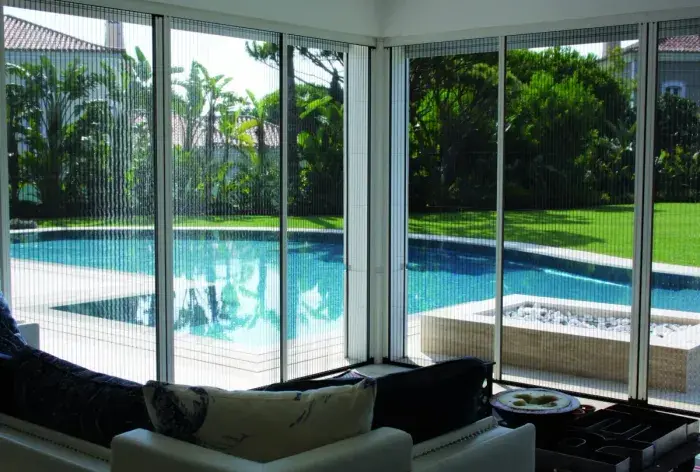
Choosing the right insect screen is not the same for every home. A window has different needs, a balcony door that opens many times a day has different needs, and a large opening leading to a veranda, garden or holiday home has different needs again.
If you are wondering which insect screen is right for your home, the answer depends on the type of opening, how often it is used, its dimensions, and whether there is a roller shutter or exterior shutter. In this guide, you will see which insect screen suits each space best and which solutions are more practical for windows, balcony doors, large openings and holiday homes.
Why choosing the right insect screen matters
An insect screen is not just an extra element added to a frame. It is a system that affects comfort, ventilation, functionality and the overall user experience of the space.
When the right screen is chosen, everyday life becomes easier. The screen operates smoothly, truly fits the opening and serves its purpose without getting in the way. But when the wrong type of screen is chosen, it can lead to difficult passage, poor fitting or faster wear.
That is why, before deciding which insect screen to install in your home, it is worth looking at what suits each space best.
What to consider before choosing an insect screen for your home
Before choosing an insect screen, there are a few basic criteria that play a decisive role.
The type of opening
A different screen is better suited for a window, and a different one for a balcony door, entrance door or large opening. The right choice always starts with the type of frame and opening.
Frequency of use
If the opening is used many times during the day, the screen must offer comfort, easy passage and practical everyday use.
The dimensions of the opening
Small and large openings are not always served by the same system. The larger the opening, the more important it is to choose the right solution.
The presence of a roller shutter or exterior shutter
In many openings, whether there is a roller shutter or exterior shutter directly affects which insect screen is the best option.
Ease of passage
In homes with children, elderly people or generally heavy daily use, the screen should allow comfortable and natural passage.
Which insect screen is best for windows?
For most windows, the most classic and practical option is a roller insect screen.
A roller insect screen works very well for:
- bedrooms
- kitchens
- bathrooms
- utility spaces
It is a practical, functional and discreet solution that serves openings which are not used as passageways. For that reason, when someone is looking for the best insect screen for a window, a roller screen is usually the first and safest option.
What is the best insect screen for a balcony door?
A balcony door is one of the most demanding openings in a home. It is usually used many times a day and needs a screen that offers comfortable passage and everyday practicality.
Pleated insect screen for balcony doors
The pleated insect screen is the most common choice for balcony doors. It has become so popular because it works very well for daily use and provides easy access to the balcony or yard.
For many homes, it is the most familiar and most practical solution, especially when the balcony door opens and closes frequently.
Horizontal roller insect screen for balcony doors
A very good alternative is the horizontal roller insect screen with straight mesh. This solution offers a different look and different operation compared to a pleated screen, while still remaining very practical.
At RollStop, this option corresponds to the Jolly model. It is a reliable solution for anyone looking for an insect screen for a balcony door with horizontal movement and straight mesh.
Which insect screen should you choose for a balcony door?
In most cases, the right choice for a balcony door is either a pleated insect screen or a horizontal roller insect screen, depending on what suits the space and your needs best.
When is a hinged insect screen door the better choice?
A hinged insect screen door is not usually the first choice for balcony doors that have a roller shutter or exterior shutter.
It is more suitable for openings that do not have a roller shutter or exterior shutter, such as:
- entrance doors
- kitchen doors
- doors leading to a garden or yard
In these cases, a hinged insect screen door is a stable and practical solution, as long as there is enough space for the leaf to open properly.
Which insect screens are suitable for large openings?
When the opening is large, the choice needs more attention. In these cases, it is not enough just to cover the opening. The screen must operate properly, withstand use and provide everyday practicality.
For large openings, depending on the application, suitable solutions may include:
- double-leaf systems
- sliding panels
- motorized insect screens
The final choice depends on the dimensions, the use and the overall layout of the space.
Which insect screen is best for difficult or narrow openings?
For difficult or narrow openings, the right insect screen cannot be chosen using general rules alone. You need to consider measurements, the available space and the specifics of the application.
The more demanding the opening is, the more important it becomes to choose a screen that will work properly in practice and not only in theory. In these cases, correct technical evaluation plays a key role.
Which insect screen is best for a holiday home?
In a holiday home, the main criterion is not only use, but also seasonality. Many holiday homes are used only for a few days or a few periods during the year. This means that the right insect screen for a holiday home must offer not only practicality, but also easy handling when the property remains closed.
In these cases, especially suitable solutions are:
- an insect screen with caterpillar track and pleated mesh
- an insect screen with caterpillar track and straight mesh
At RollStop, these solutions correspond to the Zero and Jolly models.
Their main advantage is that they can be easily removed from the frame, stored in a protected place and reinstalled when needed. For this reason, they are a particularly practical choice for holiday homes.
Which insect screen suits a high-use area?
A high-use area has different needs than a holiday home. Here, the priority is daily durability and ease of use.
In openings that are opened and closed many times a day, the right insect screen should offer:
- comfortable passage
- smooth operation
- practicality
- durability under frequent use
The best insect screen for a high-use area is the one that consistently serves the space without making everyday movement difficult.
Which insect screen is more practical in a home with children or elderly people?
In homes with children, elderly people or generally increased daily movement, ease of use matters even more.
The screen should:
- operate comfortably
- not obstruct passage
- fit naturally into everyday home life
When an insect screen is truly practical, the space becomes more functional and everyday use becomes more pleasant.
Why is proper insect screen installation so important?
The right insect screen alone is not enough. To perform as it should, it needs correct measuring, correct fitting and proper insect screen installation.
This is especially important in:
- balcony doors
- large openings
- demanding applications
A correctly installed insect screen operates more smoothly, offers a longer service life and serves the space more effectively. Should you ever need insect screen repair in the future, proper installation from the start makes all the difference.
Conclusion: which insect screen is ultimately the right one for your home?
There is no single insect screen that is ideal for every home and every opening. The right choice depends on the space, the dimensions, the frequency of use and the specific characteristics of each application.
In general:
- for windows, a roller insect screen is very often the right choice
- for balcony doors, a pleated insect screen or a horizontal roller insect screen is often the best fit
- for openings without a roller shutter or exterior shutter, a hinged insect screen door may be more suitable
- for holiday homes, particularly practical solutions are Zero and Jolly
- for large openings, more specialized solutions are needed, such as double-leaf systems, sliding panels or motorized insect screens
If you are not sure which insect screen is right for your home, the best approach is to properly evaluate the space and your actual needs. That way, you will choose a solution that truly serves your everyday life.
If you need help choosing, RollStop can recommend the insect screen that best suits your space. Contact us for a free evaluation.
Frequently asked questions about choosing an insect screen
Which insect screen is best for a window?
In most cases, a roller insect screen is the most practical option for windows because it is easy to use and does not take up extra space.
Which insect screen is best for a balcony door?
The most common choice is a pleated insect screen, while a very good alternative is also a horizontal roller insect screen, such as the Jolly.
When is a hinged insect screen door suitable?
It is more suitable for openings without a roller shutter or exterior shutter, such as entrance doors, kitchen doors and garden doors.
Which insect screen is practical for a holiday home?
Zero and Jolly are particularly practical solutions for holiday homes because they can be easily removed, stored in a protected place and reinstalled when needed.
Which insect screens are suitable for large openings?
Depending on the application, double-leaf systems, sliding panels or motorized insect screens may be suitable.
Frequently asked questions
Which insect screen is best for a window? +
In most cases, a roller insect screen is the most practical option for windows because it is easy to use, discreet and does not take up extra space.
Which insect screen is best for a balcony door? +
The most common choice for a balcony door is a pleated insect screen. A very good alternative is also a horizontal roller insect screen with straight mesh, such as the Jolly model.
When is a hinged insect screen door suitable? +
A hinged insect screen door is more suitable for openings without a roller shutter or exterior shutter, such as entrance doors, kitchen doors and garden doors.
Which insect screen is practical for a holiday home? +
For a holiday home, particularly practical solutions are Zero and Jolly, because they can be easily removed from the frame, stored in a protected place and reinstalled when needed.
Which insect screens are suitable for large openings? +
For large openings, depending on the application, suitable solutions may include double-leaf systems, sliding panels or motorized insect screens.